Purdue University · Computer Science
Ethan Dickey
PhD candidate in Computer Science
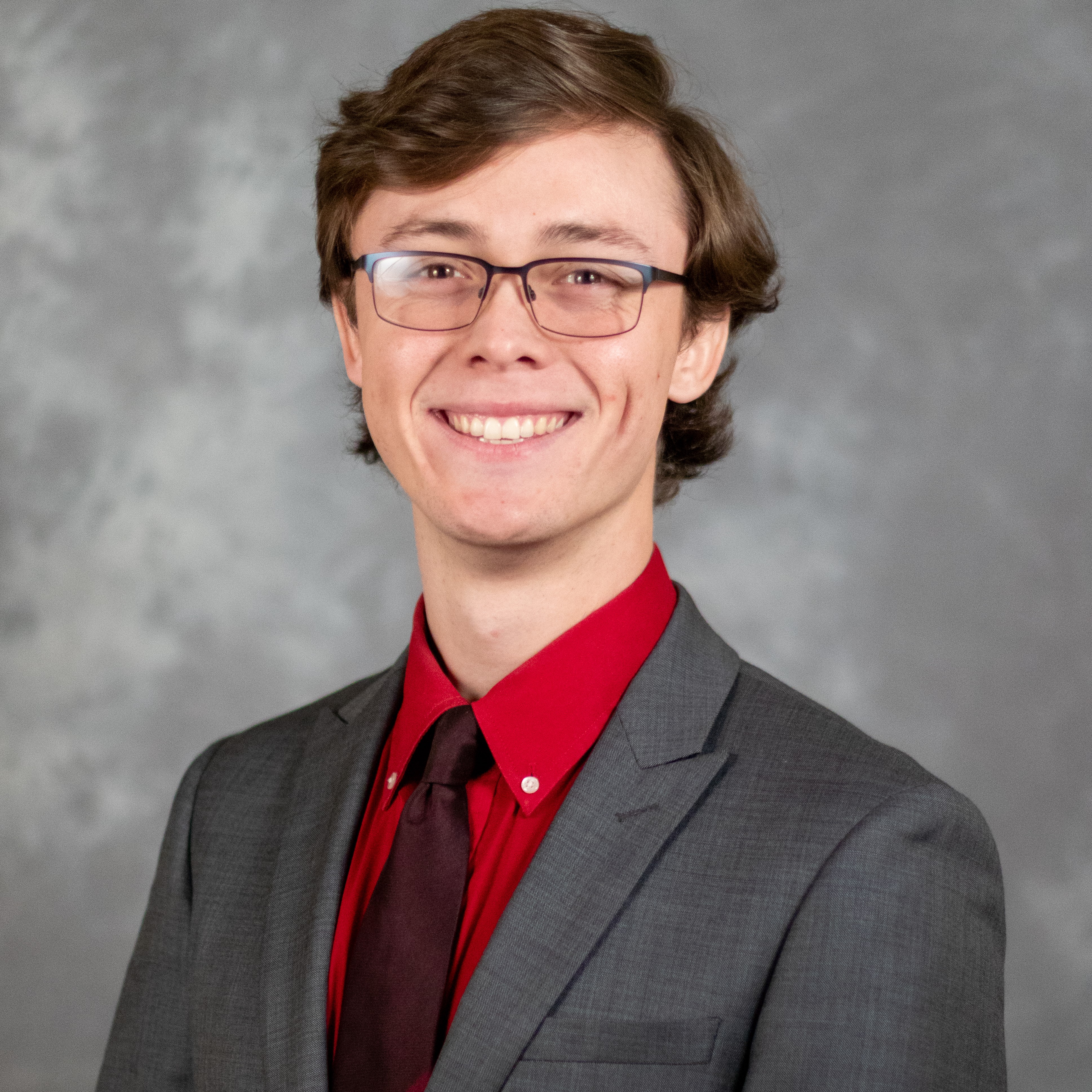
I am a sixth-year PhD candidate in Computer Science at Purdue University, advised by Sabre Kais and Alex Psomas. I expect to graduate in May 2027.
My main research uses graph theory and spectral methods to understand how classical networks can realize quantum-like states, and what we can control and measure in those systems. I also study the computational complexity of voting rules and how students learn with generative AI. Teaching and mentoring are a substantial part of my work: I lead Purdue’s competitive programming course sequence and have advised twelve undergraduate researchers.
Questions & directions
Research
Quantum-like information in classical networks
A network’s collective modes can have the mathematical structure of a qubit. I study how to build networks with a desired state, how their structure determines the available operations, and what can be learned from their response to a measurement. My work gives explicit constructions using signed regular graphs and Hermitian weighted graphs, and develops readout methods for effective two-qubit states.
I am now studying composition, dynamics, and robustness: when does a useful logical description survive imperfections, and how do leakage and spectral isolation affect what the network can do? I am also developing a review and tutorial on graph-based quantum-like information and collaborating with Gregory Scholes’s group on network dynamics.
Signed-graph constructionsComplex statesMeasurement & readout
Algorithms & computational social choice
I study the computational difficulty of collective decision making. With Alex Psomas and Athina Terzoglou, I proved that finding a winner under Stable Voting or Simple Stable Voting is PSPACE-complete. My work with Aidan Casey considers how the assumptions and possibilities of voting change in quantum models.
My ongoing projects examine tournament solutions, restricted voting instances, and the complexity of computational games.
Generative AI & computing education
I study how to teach students to use generative AI while developing the judgment and problem-solving skills they need to work independently. My research combines classroom studies with the design of instructional tools, from structured AI-literacy activities and reflection on code to simulated students for teaching-assistant training.
In a randomized algorithms-course study, we found that evaluating GenAI solutions improved homework scores without a statistically significant difference in exam performance. That distinction motivates my broader interest in when AI-supported activities lead to learning that transfers beyond the activity itself. My current work also examines how a tool’s design assigns instructional authority, preserves learner agency, and gives instructors meaningful oversight.
Ongoing studies include GLOW-based GTA preparation and how constructing test cases helps students evaluate and understand programs.
Learning & evaluationAI-Lab studyInstructional governanceTools & materials
Recent news
Quanta Magazine discusses quantum-like networks and my work on their graph structure.
Our signed-graph QL-bit paper is published in Royal Society Open Science, and our measurement and readout preprint is available on arXiv.
New preprints: Stable Voting is PSPACE-Complete and Is Solving Better Than Evaluating GenAI Solutions? Our study of competitive-programming performance consistency is published in the ICPC Journal of Competitive Learning.
- FIE 2026
CodeStylist and BoilerSketch are accepted as full papers at IEEE Frontiers in Education.
Publications & preprints
Journal articles and accepted conference papers, followed by public preprints and poster presentations. Ongoing research is described above.
Journal articles & accepted conference papers
-
2026 · Royal Society Open Science 13(9), 260238
Graph constructions and spectral guarantees for programmable quantum-like states in classical networks.
-
2026 · IEEE Frontiers in Education (FIE) · Accepted full paper
Course-specific AI feedback supports code-style revision, with a formative staff evaluation of the generated explanations’ usefulness and reliability.
-
BoilerSketch: A TA-Supervised, Diagram-First GenAI Practice for Structured Diagrams in CS1/Early CS2
2026 · IEEE Frontiers in Education (FIE) · Accepted full paper
A supervised tablet interface combines student sketches with generated structured diagrams, with instructional-staff evaluation of its usefulness for conceptual support.
-
2026 · ICPC Journal of Competitive Learning 2(1), 1–11
Ten years of ICPC standings and Codeforces ratings reveal how consistently different contest formats rank programming performance.
-
2026 · ACM SIGCSE Technical Symposium, vol. 1, 757–763
AI-generated questions adapt to students’ submitted code and outcomes to prompt reflection and debugging, with classroom feedback identifying benefits and reliability limits.
-
2024 · SN Computer Science 5, 720
A classroom framework teaches students to prompt, critique, and check GenAI responses while preserving opportunities to develop their own programming skills.
-
2024 · IEEE Frontiers in Education (FIE)
A structured workflow helps instructors develop and revise course materials with GenAI while keeping learning objectives and pedagogical context explicit.
-
2024 · IEEE Frontiers in Education (FIE)
A course-forum platform drafts responses with GenAI for instructional staff to review and edit, with a classroom study of workload and student reception.
-
2023 · IEEE International Conference on Wireless for Space and Extreme Environments (WiSEE)
An implementation of Bundle Protocol version 7 is evaluated using a network with configurable faults.
Preprints
-
2026 · arXiv:2609.14620 · Preprint
Reconstructing effective real two-qubit measurement statistics from the spectral responses of a structured classical network.
-
2026 · arXiv:2609.26098 · Preprint
A six-dimensional framework compares how AI teaching tools assign instructional authority, preserve learner agency, and support human oversight and revision.
-
2026 · arXiv:2609.26139 · Preprint
A three-course design case develops algorithmic problem solving through mastery-oriented practice before introducing timed individual and team contests.
-
2026 · arXiv:2607.27586 · Preprint
A randomized crossover study of 220 algorithms students found no statistically significant differences in exam or overall course performance between the two assignment approaches.
-
2026 · arXiv:2607.14366 · Preprint
Winner determination is PSPACE-complete for both Stable Voting and Simple Stable Voting.
-
2026 · arXiv:2604.23991 · Preprint
Hermitian weighted-graph constructions realize prescribed complex QL-bit states and reveal phase restrictions in natural symmetric alternatives.
-
2025 / 2026 · arXiv:2505.00100 · Preprint, revised 2026
A multi-course mixed-methods study finds shifts in students’ reported comfort and willingness to use GenAI, while reported use on graded work remains stable.
-
2025 · arXiv:2505.08244 · Preprint
An experience-based analysis examines the limits of code-similarity detection and argues for combining integrity checks with oral interviews and authentic assessment.
-
2023 · arXiv:2309.02593 · Preprint
Extends Quantum Condorcet Voting and defines quantum-specific truthfulness to study how classical voting impossibility results change in a quantum setting.
-
2022 · arXiv:2206.06419 · Preprint
A relative model of computation examines which properties of a simulator can be inferred by a machine running inside it.
Posters & extended abstracts
-
2026 · ACM SIGCSE Technical Symposium · Poster
-
2026 · ACM SIGCSE Technical Symposium · Poster
-
2026 · ACM SIGCSE Technical Symposium · Poster
-
2026 · Quantum Information Processing (QIP) · Poster
-
2026 · Quantum Information Processing (QIP) · Poster
-
2025 · Purdue RCAC Cyberinfrastructure Symposium · Top Poster Award
-
2025 · Purdue Spring into Quantum · Poster
-
2025 · ACM SIGCSE Technical Symposium · Poster
Teaching
I developed Purdue’s CS 211/311/411 competitive programming sequence beginning in Fall 2021 and have been Instructor of Record for CS 211 since Fall 2022. I coordinate the sequence, develop its curriculum and assessments, and mentor its teaching staff. CS 211 typically enrolls about 100 students each semester.
My approach starts with students learning to recognize a problem’s structure, explain a solution, and test whether it works. The sequence builds toward timed individual and team contests after students have developed a broader foundation in algorithmic problem solving. This work is described in my curriculum design paper.
| CS 211 · Competitive Programming I | Instructor of Record, Fall 2022–present; curriculum development and teaching assistance, Fall 2021–Spring 2022. |
|---|---|
| CS 211 / 311 / 411 | Course-sequence leadership, assessment design, and TA supervision. |
| CS 240 · Programming in C | Graduate Teaching Assistant, Summer 2026. |
| CS 251 · Data Structures and Algorithms | Graduate Teaching Assistant and course development, Summer 2022. |
I earned Purdue’s Graduate Certificate in Teaching and Learning in Engineering in 2023. I also coach Purdue’s ICPC teams and have supported teams at regional, North American, and World Finals competitions.
Teaching & service recognition
- OGSPS Excellence in Teaching Award, Purdue University, 2025.
- Raymond Boyce Graduate Teaching Award, Purdue Computer Science, 2025.
- Top Poster Award, Purdue RCAC Cyberinfrastructure Symposium, 2025.
- Outstanding Service to the Department by a Student, Purdue Computer Science, 2024.
Mentoring
I have advised twelve undergraduate researchers on computing-education projects, including the development and study of GLOW, Owlgorithm, CodeStylist, BoilerSketch, and BoilerTAI. My earlier mentoring included co-advising students with Andres Bejarano through Summer 2025 and independently advising Ashok Saravanan and Alex Siladie from Fall 2025 through Summer 2026. Since Fall 2026, I have been advising Thanh Dat Le on adversarial test design in competitive programming.
| Researcher | Dates | Projects |
|---|---|---|
| Thanh Dat Le | Fall 2026–present | Adversarial test design in competitive programming |
| Ashok Saravanan | Summer 2025–Summer 2026 | GLOW |
| Alex Siladie | Summer 2025–Summer 2026 | GLOW |
| Peter Kurto | Fall 2024–Spring 2025 | CodeStylist; Owlgorithm |
| Erin Kramer | Fall 2024–Spring 2025 | Owlgorithm |
| Juliana Nieto-Cardenas | Fall 2024–Spring 2025 | Owlgorithm; GoBoiler |
| Libra Vento | Fall 2024–Spring 2025 | CodeStylist; GoBoiler |
| Vivan Tiwari | Summer 2024–Spring 2025 | BoilerTAI; BoilerSketch |
| Anvit Sinha | Spring 2024–Spring 2025 | BoilerTAI; BoilerSketch |
| Shruti Goyal | Fall 2023–Spring 2024 | BoilerTAI |
| Zachary Sy | Fall 2023–Spring 2024 | BoilerTAI |
| Yashwi Thakkar | Summer 2023 | Exploratory research |
I have also advised instructors developing competitive-programming courses, including Metin Aktulga at Michigan State University and Sam Weese at the University of Cincinnati.
Service & research support
Building academic communities
I served as president of Purdue’s Computer Science Graduate Student Association from 2024 to 2026, after earlier roles on the graduate student board. I founded and chaired the inaugural Purdue CS Graduate Research Symposium in 2025.
I have also served on the ICPC Curriculum Committee and helped build Purdue’s community of instructors working with generative AI in education.
My reviewing service includes ACM Transactions on Computing Education, Computers and Education: Artificial Intelligence, SIGCSE, IEEE FIE, and IEEE EDUCON.
Support for computing-education research
With Andres Bejarano, I served as co-PI on Purdue Innovation Hub project IH-AI-23002 (2023–2025), supported by an initial $88,000 award and a $99,000 extension. This support enabled our work on generative AI in computing education and funded undergraduate research opportunities.
Research experience
My experience also includes a research internship at Blue Wave AI Labs in Summer 2026 and a quantum-computing research internship at IBM in Summer 2021.
Teaching & research resources
Materials for instructors, workshop participants, and researchers. Poster PDFs are linked with their presentations above.
GLOW: GTA training
Evaluating GenAI solutions
Tools & demonstrations
GLOW
Office-hour practice with AI-simulated students and rubric-based feedback for graduate teaching assistants.
Owlgorithm
Reflection prompts that ask students to explain their code and reasoning during competitive programming. The live demo is currently offline; example inputs are available below.
Example problems & code
CodeStylist
Course-aware feedback on code style for early undergraduate programmers. The live demo is currently offline; the original Java examples remain available.
Example code
BoilerSketch
A TA-supervised workflow for generating and discussing structured diagrams in introductory computing courses. Contact me for a demonstration.
Example prompts & recorded demonstrations
BoilerTAI
Draft responses to course-forum questions, with instructional staff reviewing and editing each response before it is posted.
Poster templates
Horizontal Purdue poster template (PowerPoint) · Vertical Purdue poster template (PowerPoint)
Writing & outside of research
I enjoy explaining research and teaching ideas to audiences outside my own field. My blog includes classroom activities, occasional reflections, and a little satire.
Outside research, I love hiking Colorado’s fourteeners, skiing double-black-diamond terrain, and climbing outdoors. I also enjoy Sudoku and host weekly board game nights. My wife and I train our border collies, Kali and Rogue, in agility on a course we built ourselves. They have rather different opinions about toys: Kali’s defense of the tennis ball prompted a rebuttal from Rogue.